

Disabled and Disposable: How the workforce was designed to exclude us

There is a policy that most American grocery stores strictly enforce, which is that cashiers (and all other department employees) must stand for the entirety of their shift.
In most cases, it has nothing to do with an employee’s ability or inability to carry out the essential duties of their job while seated. If you’ve ever been to an Aldi and had your order rung up by a seated cashier, you’ve seen firsthand how it can be done.
What’s really happening, I believe, is that somewhere in the American cultural zeitgeist is the tacit maxim that a seated employee is a lazy employee, and these policies exist both to assuage public expectations on that point as well as to reinforce them.
This goes so much deeper than cashiers getting stools, though. When you pull on this thread, you begin to unravel a massive, dusty old tapestry of power dynamics as old as time.
Who got to sit, and who had to stand
Bear with me for a bit of relevant historical lore. I promise to make it brief.
For most of recorded human history, the chair was less a piece of furniture and more a status symbol. The earliest chairs were reserved for pharaohs, kings, and high priests. In medieval Europe, thrones were architectural objects, literal symbols of dominion. Ordinary people stood, or at best got a bench, or a stool.
The French court under Louis XIV made this so explicit that it became almost a parody. At Versailles, whether you could sit in the presence of the king, and on what type of seat, was a matter of rank. Duchesses got a backless stool while Princesses got a chair with a back, etc. Madame de Montespan, mother of several of the king’s children and widely recognized as the unofficial Queen of Versailles, was made to stand because her estranged husband refused to accept the honor of a stool on her behalf. That is how precise and deliberate the humiliation was.
The same logic ran through Victorian and Gilded Age households. Servants stood at attention until dismissed, moved silently, and remained invisible unless spoken to. Even amongst the servants, there was a hierarchy of who could sit (and when.) Straight-backed hall chairs, specifically designed to be uncomfortable, kept lower servants awake and on-call.
The chair signified varying levels of power while standing was always reserved for servants and “lessers.”
The more things change, the more they stay the same
When Safeway was challenged over its policy requiring cashiers to stand, company spokesperson Craig Muckle told the Washington Post that standing cashiers were simply a cultural thing, acknowledging that Americans do not consider sitting while working “normal”.
That is a rather stunning thing to say out loud. The job can be done seated. The company knows it can be done seated. And yet, the reason it is not done seated is that Americans simply expect the person serving them at the register to be standing.
People will claim that sitting on the job is ‘unprofessional,’ but notice that this claim is applied selectively. Bank tellers sit. Librarians sit. Artisans sit. White-collar workers of every kind sit, many of them in public-facing roles, and no one questions their professionalism. The objection surfaces specifically for certain workers, like the cashier, the retail clerk, the food service worker, et al.
The through-line is class. “Professionalism,” in this context, is a '“respectable” word for something older and far less respectable, and that is the expectation that service workers should perform deference, that they need to remain visibly subordinate, and that they “know their station.”
The stool or the chair doesn’t prevent the job from being done. We know this. What it prevents, or, rather, what it threatens, is a social order that requires certain people to be seen standing while others sit.
And the rule does not relax when the store is empty. If you’ve ever worked in retail or customer service, you know this well. What you might not have known, at least not consciously, is that this is because the rule was never about customer service.
In 2019, Safeway was ordered to pay $12 million after a California cashier was denied the right to sit. The Equal Employment Opportunity Commission has described a cashier’s stool as “a common-sense solution to remove a workplace barrier,” noting that the job can be effectively performed sitting down.
I mean, think about this for a moment. Really think about this. Courts have had to compel companies to allow disabled cashiers to use stools that would cost them nothing to provide and in no way, shape, or form restrict the performance of that role’s essential duties.
The people defending these policies are not confused about the function of a stool.
They’re not confused at all.
And we shouldn’t be, either. Which is why I want to lay this all out so we can all be on the same page and read exactly what they’re hoping we never would between the lines.
Planned obsolescence as applied to people
I want to share something my partner pointed out in a conversation the other night that I have not been able to stop thinking about, and that is that the conditions in these jobs are not accidental, and they’re not even fully explained by mere negligence.
They’re intentional in the most comic-book-villain of ways.
Consider what long-term employment costs a company. It costs them raises, accumulated benefits, and institutional knowledge/experience that has to be compensated.
Now, consider what high turnover provides a company. It provides them with a rotating supply of workers who can always be paid entry-level wages, who have not yet accumulated the protections that come with tenure, and who can be replaced the moment the cost of keeping them rises above the cost of replacing them.
Strict sick-day policies, mandatory standing, relentless physical demands, schedules that change week to week that make things like outside obligations (appointments, social life, etc.) impossible to manage, these are, as far as the company plan goes, a feature and not a bug.
The goal is not to retain workers.
The goal is to extract maximum labor at minimum cost for as long as a worker is useful, and then to have conditions in place that make it easy to justify pushing them out.
It is literally planned obsolescence, applied to human beings instead of iPhones.
And these conditions do not spare able-bodied workers, either. This isn’t just about disabled workers, though it impacts us first (as ever, we are the canaries in the coal mine for the rest of y’all).
The burnout rate in retail, food service, and warehousing is infamous and universal.
And what these conditions do, in addition to generating turnover on demand, is make these jobs effectively impossible for anyone who needs even minor accommodation, like a cashier who cannot stand for eight hours, or a warehouse picker with a chronic pain condition, or a customer service worker who needs noise-canceling headphones to concentrate.
These conditions are, essentially, the anti-homelessness spikes under underpasses and armrests on public benches designed to make it impossible for anyone to lay down on them. They’re meant to be hostile to everyone, but especially to anyone who isn’t able-bodied.
And we currently live in a political moment that is attacking, simultaneously, the protections that make workplace accommodation possible and the safety nets that would catch the people those jobs exclude.
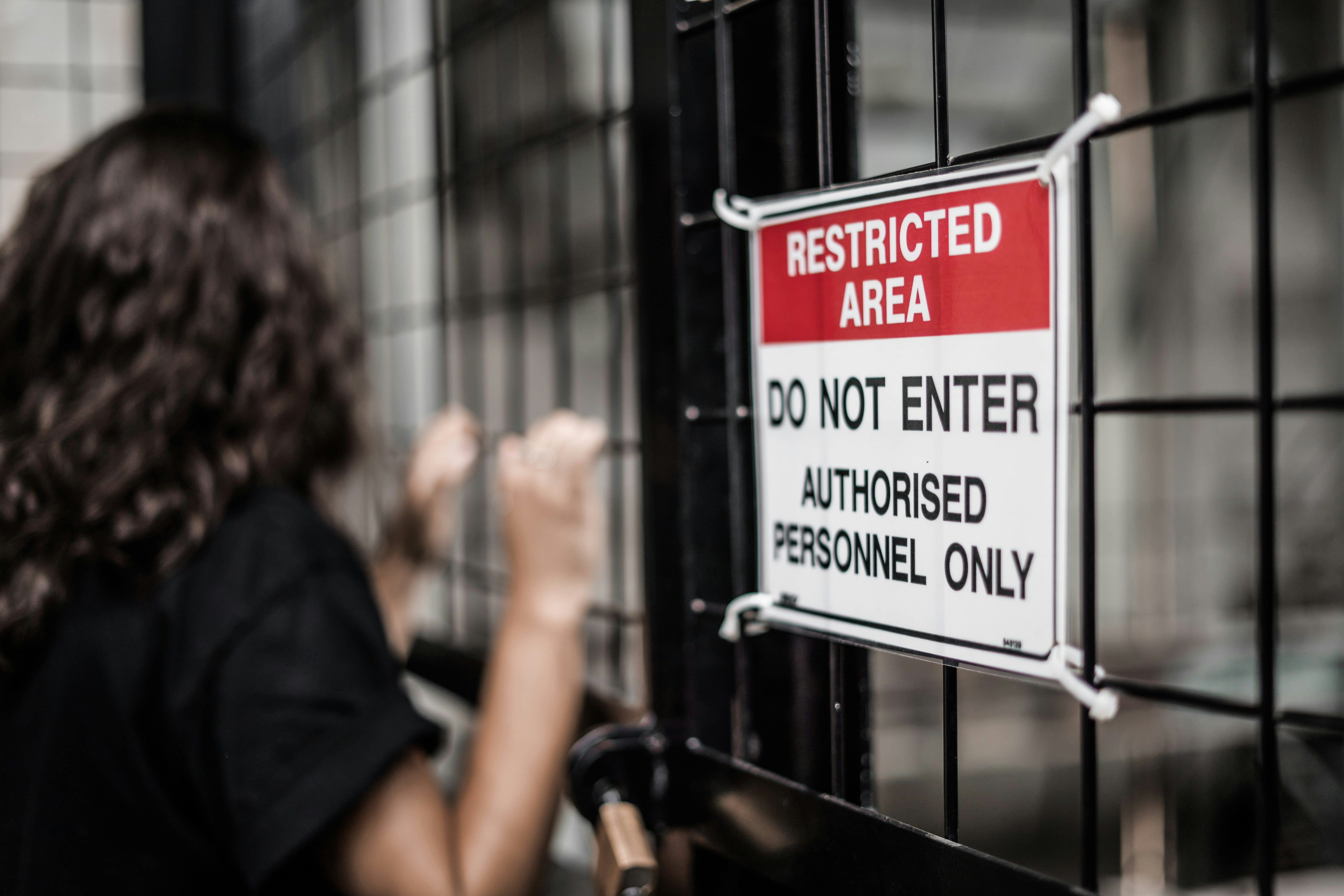
Two doors, both closing
Right now, many of the people making policy in Washington are pursuing an agenda that, if you follow it to its conclusion, leaves disabled people with nowhere to go.
Again, think feature, not bug.
On one side we see them gleefully gutting workplace protections. The Americans with Disabilities Act, the accommodations framework, and the enforcement mechanisms that compel employers to provide reasonable adjustments are all under pressure.
The argument is that they are “burdensome” to business. What they actually are is the only reason a disabled worker can, at least for the time being, legally demand a stool, a flexible schedule, a quieter workspace, a shift that accounts for medical appointments. If the legal compulsion gets successfully removed, you just watch how quickly “we’d love to accommodate you” turns into “this position requires someone who can meet all the physical demands of the role.”
We’re already closer to that scenario than you may realize.
On the other side, we see the wanton dismantling of the various “safety net” programs. We see more and more push for Medicaid work requirements, cuts to SNAP, and structural changes to Medicare and Social Security Disability that would narrow eligibility. Then you add administrative burdens that functionally exclude the people who need them most, and over time reduce both access and funding.
The people pushing these changes frame them as “fiscal responsibility”, as incentivizing work, and as cutting waste (remember the man brandishing a chainsaw on stage?) But I think it is important to acknowledge that what they are actually doing is making survival impossible for the people who cannot work, and making the path back from disability-related unemployment into a maze with most of the exits blocked.
This is not a new idea or policy. The rhetoric of “useless eaters,” of the “burden” the disabled place on “productive society”, of the “wisdom” of institutional “care” over community support is language that has well-documented history, and that history does not end anywhere that most of us ever want to return. We do not have to say the quiet part out loud to know what it is.
These two things are coordinated rather than being separate policies that just so happen to be on the floor at the same time. On the one hand, you force disabled people out of the workforce by removing the legal requirements that make the workforce accessible. Then, you remove the programs that would allow those people to survive outside the workforce. The ones whose families can absorb the cost of their care become “burdens” on those families. The ones whose “care” can be monetized disappear into private institutional settings, which are, not incidentally, among the most profitable industries in this country (and, also not incidentally, currently being pushed by some in Washington). The rest are left to their fate.
This is not an accident.
And it has a name, a name that its proponents would rather hide behind pretty political language and dog-whistles.
What eugenics actually looks like
Eugenics does not require a government program with that word in the title. It requires only a consistent, systemic set of conditions that make it harder for certain people to survive, reproduce, or participate in public life, combined with a political class unwilling to prevent those conditions and in some cases actively creating them.
When you remove the accommodations that allow disabled people to work, and then remove the supports that allow disabled people to survive without work, and then float proposals to return to institutional “care” for those who cannot be absorbed into the workforce or managed at home, you have described a system that is filtering disabled people out of public life with efficiency, if not with a name.
There is open discussion, from real figures with real political influence, about cutting what they call “unproductive” spending on people who are, by the logic of their economic framework, “unproductive people.”
This is the modern face of a very old idea, that a person’s right to resources, dignity, and survival is contingent on their economic output, and that people who cannot produce at the level the market demands are a problem to be managed, not people to be supported.
The moralization of overwork is, also, part of this machinery.
The “pull yourself up by your bootstraps” ethic, the sacralization of grinding, the cultural frothing contempt for rest, and for accommodation, and for needing anything, at all, ever, was first circulated and reinforced by the people who benefit from a workforce that works itself to exhaustion without complaint, that does not organize, that blames itself for its own conditions. It is propaganda in the most straightforward sense of the word, and it has been remarkably effective.
It has been effective enough that people with disabilities have internalized it, too. I know I have. It’s the internalized shame that makes us question whether we really need the stool at the cash register and it’s the hesitation before disclosing an accommodation request (true story: I once nearly hyperventilated in the car before going into my job to disclose my health conditions and request accommodations). It’s the constant auditing of whether your need is enough to justify asking and constantly convincing yourself that it’s not.
That internalization is the point of the propaganda.
It results in a worker who is ashamed of their needs and a worker who will not demand that those needs be met.
Naming it plainly
The thing these systems have in common is that they work better when they are invisible.
The person who insists standing is “just professional” does not think of themselves as enforcing an aristocratic body-language hierarchy that dates to the courts of Versailles.
The hiring manager who passes on the autistic candidate does not think of themselves as discriminating. Instead, they think of themselves as going with the person who was a “better fit” without ever consciously realizing that much of that came down to “vibes.”
The politician who votes to add work requirements to Medicaid does not say they are engineering conditions under which disabled people will lose access to medical care and die sooner. They say they are cutting waste. They say they are creating “incentives.” They say they are being “fiscally responsible.”
None of these people even need to know what they are doing consciously for what they are doing to have its intended effect.
But we need to know, because these systems survive on the assumption that “this is just the way things are.” That’s what is called a “thought-terminating cliche”. It is used in propaganda and cult indoctrination to prevent someone from thinking critically about a certain point. It is a statement that creates the illusion of adequate knowledge, and that is really effective in preventing further thought on the matter because who is going to continue to question something they think they already know everything they need to know about?
When “just the way things are” includes that the standing requirement is natural, and that the interview format is neutral, and that there is simply not enough money for Medicaid, and that institutions are sometimes just necessary, and that some people are, regrettably, unable to be productive, and that is a tragedy but not a policy failure and certainly not a choice someone made, people stop questioning it.
Not all people, mind you. There are those of us who have to question it, because we’re the ones whose lives are on the line. What might be a hypothetical thought experiment for someone else is our actual existence.
It is a choice someone made. Actually, it was a series of choices. The choices were made by people who benefited from them and were made at the expense of people who had less power to object.
Disabled people have always known this on some level, because we’ve had to, which is part of why this community has always, in its best moments, been oriented toward collective action rather than individual aspiration. You cannot “bootstrap” your way out of a system that was designed to disenfranchise you. You can only change the system, and you can only change the system if enough people can see it clearly enough to want it changed.
Seeing it means realizing that the stool is not about laziness and never was. The interview is not about “fit.” The cuts are not about the budget. The institutions are not about care.
See it for what it is. Name it. And then decide what to do with what you know.
Chronically Misread is a reader-supported publication. If this essay is useful to you, consider sharing it with someone who might need it, or becoming a paid subscriber to support this work.
The system feels invisible when you’re the shape it was built for. When you’re not, you realize the friction isn’t accidental.
Thank you for such a courageous take on what I have always looked with suspicion. In Canada the stools are there, but people don't use them. And I think this is why. Probably they are told by the job culture they shouldn't.
I wonder if a costumer campaign doing bad reviews for places where employees don't have a place to sit or don't do it as a job culture could change the frame.