

The Performance of Pain
Why Medicine Keeps Failing the People Who Need It Most

Content note: This piece discusses chronic illness, medical trauma, and suicide. A crisis resource is included at the end.
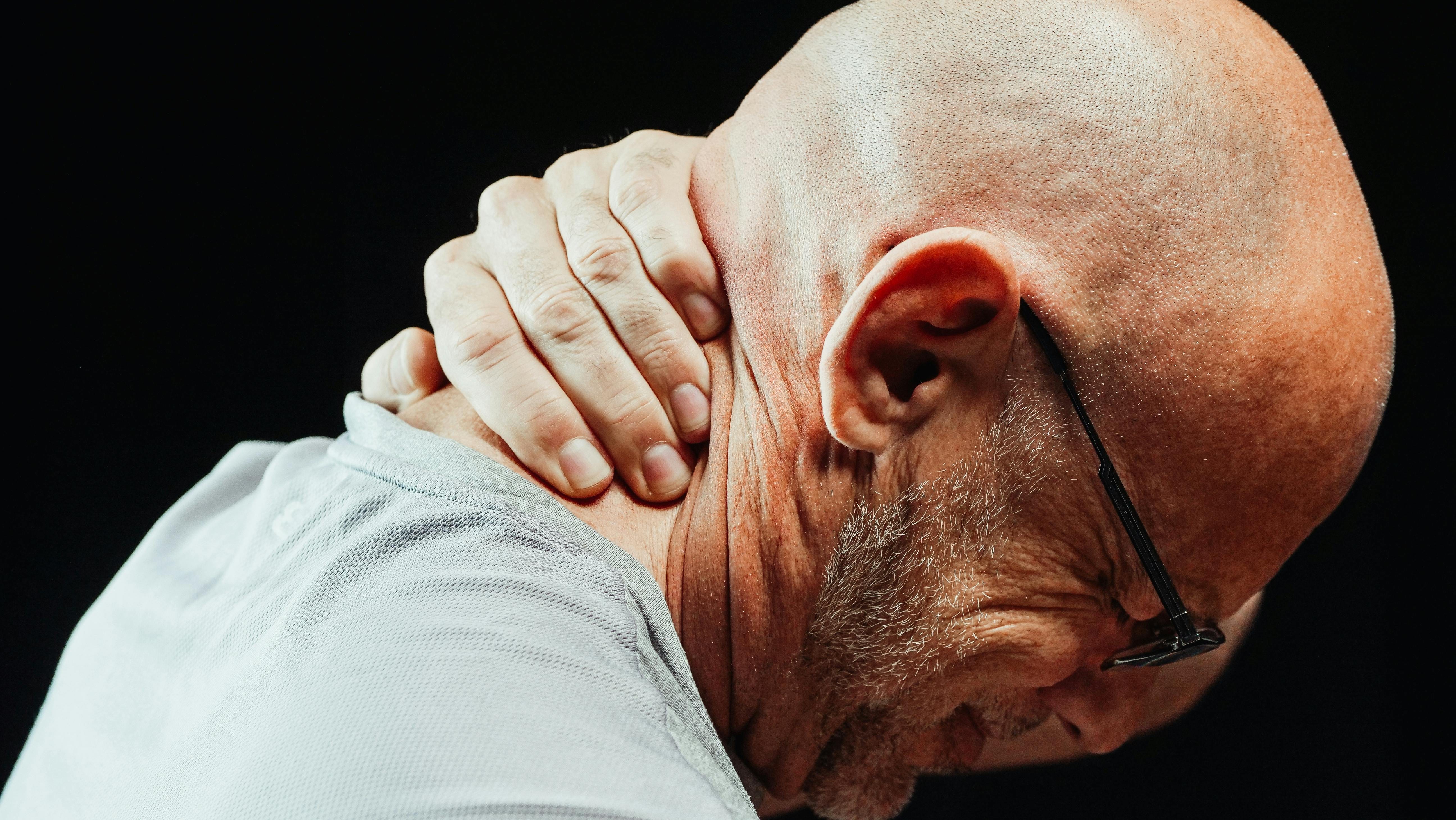
I’ve been thinking about pain and its performance.
Pain is something I know intimately. I’ve had debilitating migraines since I was eight years old. I was born with a connective tissue disorder (Ehlers-Danlos Syndrome) that has caused joint dislocations, tendon tears, spinal stenosis, four herniated discs in my neck, and a cascade of complications that have shaped every decade of my life. I’ve given birth twice with no pain medication, both times while unknowingly navigating advanced scoliosis that prevented me from ever feeling the urge to push (which resulted in my labors being much longer and much more painful than they needed to be). I’ve had a frozen shoulder so severe that any arm movement could knock me to the ground in pain. I now spend most of my time horizontal because sitting upright for more than ten minutes produces scorching, nauseating pain in my neck and shoulders.
I’m not listing these things to compete for suffering. I’m listing them because I want to establish something. I have spent my entire life inside chronic pain, and that prolonged residency has taught me things about pain that medical textbooks (and, unfortunately, too many doctors) seem to have missed entirely.
Here is what I have learned.
When you don’t know where pain is coming from, when it’s new, or when it arrives without context, it is significantly worse to navigate than pain you recognize and expect. And that’s not necessarily because the physical sensation is more intense, but because of everything the brain adds on top of it.
It’s similar to how traveling to a new destination often feels longer than the return journey. On the way back, the route is more familiar and you know what to expect, which makes the trip seem shorter. Even though the travel time is the same in both directions, the experience feels different because the initial journey is unfamiliar.
My first migraine, at eight years old, was terrifying in a way that migraines rarely are for me now, even when the later ones are objectively more severe. That first one came with the full psychological weight of the unknown: What is this? Am I dying? Will it ever stop? Is this going to happen again? Those questions have consequences, and that is because fear and psychological distress trigger measurable physical stress responses that amplify pain through the release of inflammatory chemicals. Panic, quite literally, makes pain worse.
Over time, I learned what to expect. I learned the shape and scope of my pain, what triggers it, what helps (and what to do when nothing helps). And so I stopped adding the gasoline of panic to an already burning house. I developed what researchers might call “pain self-efficacy.”
And along the way, I stumbled onto something I later learned has a name in different contexts entirely: the practice of observing a sensation without attaching a narrative to it. Noticing the pain without the story the brain tells about the pain.
I’ve since read that this is a technique CIA operatives are trained to use to endure torture. Just observe it. Don’t make it mean anything.
What I didn’t know at the time was that by learning to do this (by having to learn to do this in order to survive daily life), I was quietly becoming less credible to the medical system that was supposed to help me.
That’s because “the pain scale” is not built for people like me.
The 0–10 numeric pain rating scale used in virtually every American emergency room and doctor’s office was developed based on acute pain in otherwise healthy patients (in other words, people who do not live with chronic pain and are unaccustomed to it).
The scale implicitly measures not just sensation, but the full psychological performance of pain: the wincing, the crying, the inability to speak, the visible distress that comes with new, unexpected, frightening agony.
An able-bodied person who steps on a nail for the first time in their life might legitimately rate that experience a 9 or 10. They have no coping framework for it. They haven’t decoupled the sensation from the mental uncertainty or the emotional terror. Their pain comes packaged with all the emotional wrapping that makes it look like what medicine expects pain to look like.
A person with severe chronic neuropathy in their feet, however (someone who has felt similar pain to stepping on a nail, all day, every day for years), does not have the luxury of that response. Their nervous system has adapted, because it had to. Their psychology has, of necessity, adapted. They have instinctively learned the CIA technique not because they read about it, but because the body is self-protective.
And so when they sit in a doctor’s office and rate their daily neuropathy a 7, and they are not crying, not rocking, and able to hold a conversation, the doctor sees someone who doesn’t look like they’re in that much pain and interprets their 7 as an over-exaggeration.
What the doctor is actually seeing is someone who has mastered the hardest psychological skill in pain management. And he is penalizing them for it, not even necessarily out of conscious malice but out of institutional bias.
A 2022 study published in The Journal of Pain found that the belief that people exaggerate or over-report their pain is pervasive (and that this belief directly influences how clinicians treat patients) even though the same study found no evidence that people actually over-report their pain. The cultural assumption is not evidence-based. It is a bias. And it is a bias that has measurable consequences for patient care.
Medical files follow you.
Here is what happens when you are a chronically ill person who shows up to enough doctors, enough ERs, asking enough times for help with unrelenting pain: you get flagged.
Notes accumulate in your medical record. Words like “drug-seeking.” “Frequent flier.” “Somatic complaints.” Diagnoses of anxiety or depression are offered instead of physical investigation. And once those words are in your file, they stay with you. Future providers read them before they’ve ever laid eyes on you. The chart precedes you like a reputation, and it poisons the room before you’ve even said a word.
Research published in qualitative studies has documented this cycle extensively. Patients describe losing doctors over a single misunderstood ER visit. They describe being told to leave emergency rooms. Once the word “drug-seeking” appears in a chart, it almost never comes back off. In one documented case, a patient who had been on opioid therapy for twelve years (monitored, compliant, drug-tested) lost their doctor because of a complaint filed by an ER physician who couldn’t find a visible cause for their pain on a weekend shift.
The cruelest part of this is the trap it creates. Chronic pain patients learn very quickly that if we show our pain (i.e., if we cry, if we groan, if we look as bad as we feel), we are accused of performing for sympathy or drugs. And if we’ve learned to manage our pain with psychological tools and don’t look visibly distressed, we are accused of not “really” being in pain.
There is no presentation of ourselves that doesn’t incriminate us.
Read that again.
There is no presentation of ourselves that doesn’t incriminate us.
The system has made our suffering a crime regardless of how we report it.
And so we learn to underplay. We minimize. We choose careful words. We sit up straight and speak clearly and do not let the nausea show, because we have learned that looking too sick makes us suspects, and looking functional makes us liars, and there is no version of ourselves the exam room will simply believe.
What this means in practical terms.
People with chronic pain are at least twice as likely to die by suicide as those without it.
Let that sit for a moment.
Twice as likely to reach the point where death seems more manageable than continuing.
A 2018 analysis of more than 123,000 suicide deaths found that nearly 9% involved people who cited chronic pain directly in their suicide notes (and researchers noted this is almost certainly an undercount, since most suicides don’t leave notes at all).
More than two-thirds of those suicide notes mentioned prolonged suffering specifically. Not just pain, but the experience of suffering without relief, without being believed, without recourse.
This is what the math looks like when a medical system decides, systematically, that it doesn’t believe its most vulnerable patients.
Physicians take an oath to do no harm. But harm does not require intent. Harm can be structural, institutional, cumulative, and invisible to the person causing it while remaining devastatingly damaging to the person receiving it.
When a doctor lets bias cloud their assessment, they are not merely failing to help. They are actively participating in a system that leaves people with nowhere left to turn. When a “drug-seeking” note forecloses a future doctor’s genuine inquiry into a patient’s pain, that note is doing harm. When a pain scale designed for acute injuries in healthy bodies is applied without question to someone who has had to make peace with their body’s daily assault just to remain functional, the scale itself is doing harm.
I’ve sometimes wished (not with malice, but with a desperate desire to be understood) that I could transplant one week of my pain into the body of someone who has never felt anything like it. I think they would leave that week changed. I think they would never again say you don’t look like you’re in that much pain to another human being.
But I can’t do that. So instead, I’m saying that the fact that I have learned to exist inside my pain without coming apart at the seams is not evidence that my pain is manageable. It is evidence of how much I have had to manage, alone, with the tools I taught myself, because the system that was supposed to help me spent too much time deciding whether I was worth believing.
I am. We are.
And the medicine that keeps failing us needs to be held to account for that.
If you are living with chronic pain and are having thoughts of suicide, please reach out to the 988 Suicide & Crisis Lifeline by calling or texting 988.
I have a fantasy that my doctor is forced to follow me around for a week. Not even to feel the pain but just to SEE the impact 😅
This really resonated with me ~ I’ve lived a version of this for many years. (I’m 62 now)
One additional piece I’ve struggled with is how much I’ve internalized it After hearing “but you look like you’re doing fine to me!” for *so* many years, I started questioning myself. Could it really be “that bad?” Maybe I’m overreacting. I must not be trying hard enough.
I’m only recently in a place where medical things are showing up in measurable ways, and I’ve been taken more seriously as a result.
Thank you for putting language to something that’s so hard to explain.
And I’m really sorry this has been your experience. It’s exhausting and often lonely.